A free editorial guide from riodejaneiro.app. Use it to build your itinerary; Rio Pulse’s personalised plans are still in development.
An empty stadium by day, a full one by night
Maracanã: the stadium tour and how to watch a football match in Rio
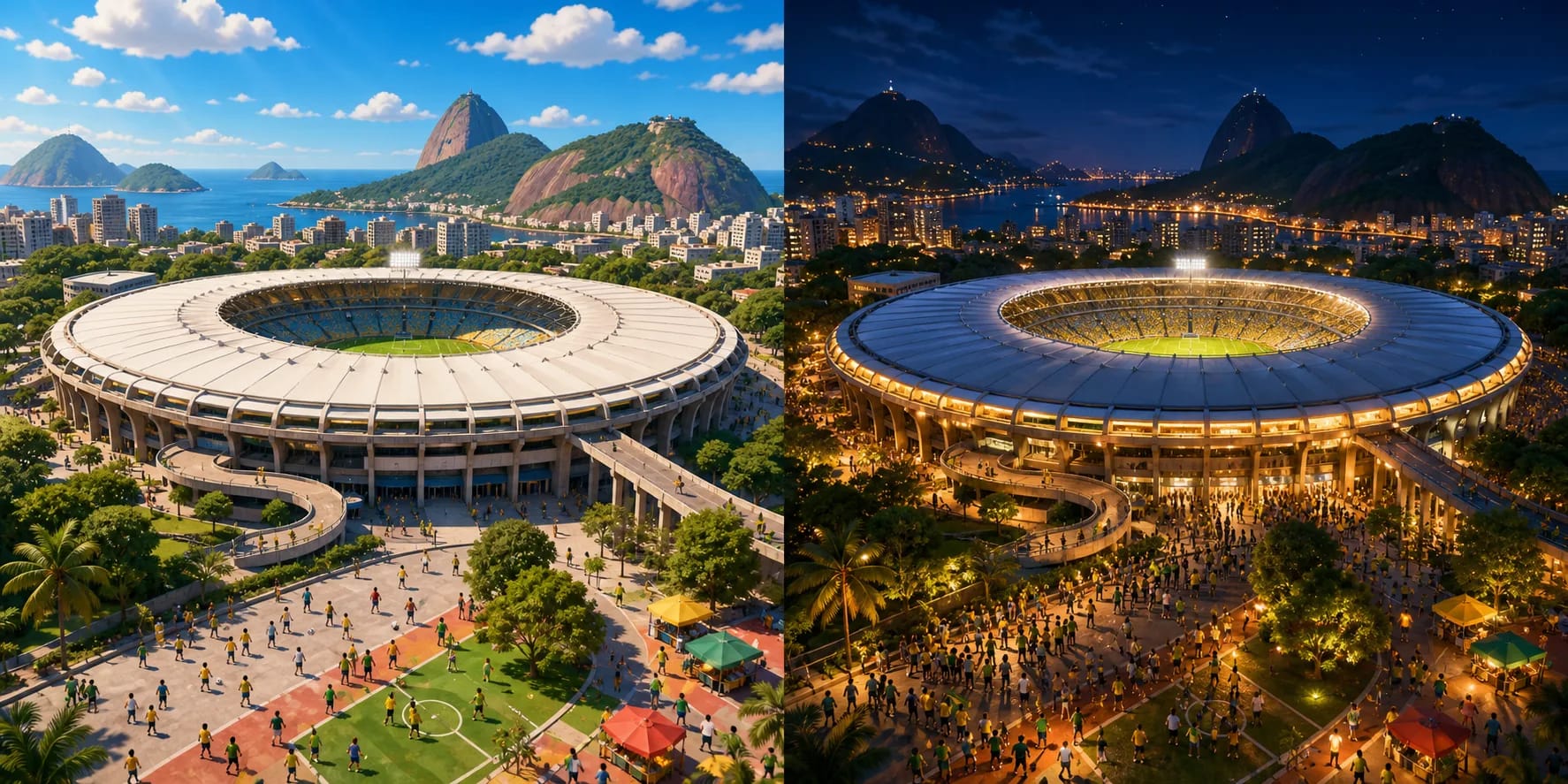
Maracanã works as two different experiences. On a quiet weekday it is a museum you can walk through at your own pace; on match night it is one of the loudest places in South America. This guide covers both, with the practical detail that decides whether a first match feels exciting or stressful.
Quick answer
For the stadium tour, buy a Tour Maracanã ticket online or at the box office and allow about an hour; on match days tours finish hours before the gates open. To watch a game, check Flamengo’s or Fluminense’s fixture list, buy only through the club’s official ticketing, register the ID or facial biometrics it asks for, and travel by metro to Rei Pelé–Maracanã station on Line 2.
The stadium tour: what you actually see
Tour Maracanã is the official visit to the stadium, officially named Estádio Jornalista Mário Filho. It opened for the 1950 World Cup, hosted the 2014 World Cup final and the opening ceremony of the 2016 Olympics, and the tour leans on that history. The route covers a dressing room, the warm-up area, the mixed zone, the press conference room and a walk out to pitch level, plus a collection of memorabilia linked to players such as Pelé, Garrincha and Zico. The operator puts the average visit at about 50 minutes.
The tour is monitored rather than a fixed guided group: you move through the rooms at your own pace with staff along the route. Tickets are sold online and at the box office by the pedestrian gate, with half-price categories for students, children, older visitors and people with disabilities on presentation of documents. Prices, opening hours and concession rules change, so check the current details on the official tour site. The tour sits well in a day built around the northern and central parts of the city, alongside the ideas in our guide to what to do in Rio.
Who plays at Maracanã and when
Flamengo and Fluminense are the stadium’s main tenants, so most of the football you can see there belongs to one of them: the Brazilian Série A (Brasileirão), the Rio state championship (Carioca) early in the year, the Copa do Brasil and, in good seasons, the Copa Libertadores. The Fla-Flu derby between the two tenants is the most famous fixture. Other Rio clubs, notably Vasco and Botafogo, also play there on occasion, especially for big derbies, and the Brazil national team uses it from time to time.
Brazilian fixtures are confirmed late. Kick-off times are often set only a couple of weeks ahead to suit television, and a match can move day or time at short notice when a club advances in a cup. Build a flexible evening into your plans rather than a fixed date, and follow the club’s official site and social channels in the week before. Midweek games often kick off late in the evening, which affects your journey home and fits poorly with an early flight or a Christ the Redeemer booking the next morning.
Buying match tickets: official channels only
Tickets are sold by the home club, not by the stadium. Each club runs a membership programme (sócio-torcedor): Flamengo’s is called Nação Rubro-Negra and Fluminense has its own sócio options. Members get priority windows, and for big games those windows can absorb most of the tickets before general sale opens. For an ordinary league game, general sale on the club’s official platform usually leaves something available; for a derby, a cup final or a title decider, expect it to be difficult.
Access is tied to identity. Brazil’s General Sports Law requires facial recognition at large stadiums, and Maracanã uses it, so after buying you are asked to register your face on the club’s biometrics platform. Ticketing and registration systems are built around the Brazilian CPF tax number; some accept a passport, others do not, so check the rules for foreigners before you plan around a specific match. Never buy from street sellers (cambistas) or unofficial resale: a ticket in someone else’s name may simply not open the gate.
- Find the fixture on the home club’s official site and note the sale dates.
- Buy on the club’s official ticketing platform, never from touts.
- Complete the facial registration well before match day.
- Carry the ID document you used to register, plus proof of any half-price entitlement.
Choosing a sector
The bowl is divided into sectors named after compass points. The areas behind the goals are where the organised supporter groups (torcidas organizadas) gather: they stand, sing for ninety minutes and are the most intense part of the stadium. The side sectors, east (Leste) and west (Oeste), are calmer, with people generally sitting, and the west side holds the pricier seats and hospitality areas. For a first match, a side sector gives you the atmosphere without being in the middle of it.
At derbies, one section is set aside for the visiting supporters and the two groups are kept apart by stewarding and police. Make sure the sector you buy belongs to the side you intend to sit with; buying a cheaper ticket in the away end by mistake is a genuinely bad idea. Sector names, layouts and which end is allocated to which club can change from match to match, so read the club’s seating map for that specific game rather than relying on someone else’s description.
- Behind the goals: standing, singing, the organised groups.
- East and west sides: seated, calmer, better for a first visit.
- At derbies: check which end is allocated to the visitors.
Getting there by metro and train
The metro is the easiest way in. Maracanã station on Line 2 was renamed Rei Pelé–Maracanã in 2026, so you will see both names on signs and maps. From Copacabana, Ipanema or Botafogo, take Line 1 and change to Line 2 where the lines meet; our metro map guide explains the connection. The same station links to the suburban rail network, which serves the stadium from the northern and western suburbs. Taxis and ride-hailing work well in daytime but become slow and expensive around kick-off and the final whistle.
On match days, travel early. The station and walkways fill in the hour before kick-off, and security searches at the gates take time, particularly for big games. Top up your transport card or check that your contactless card works before you set out, because queues at ticket machines grow fast. For wider advice on moving around the city, including late-night journeys, see our getting around guide.
- Metro: Line 2 to Rei Pelé–Maracanã station.
- Suburban trains stop at the same interchange.
- Allow at least an hour before kick-off for crowds and security.
Match-day safety, what to wear and leaving
Inside the stadium the mood is generally festive, and most problems happen outside, in transit between rival groups. Wear neutral clothing unless you are sitting with one side and wearing its colours deliberately: Flamengo is red and black, Fluminense maroon, green and white, Vasco and Botafogo black and white. Never wear one club’s shirt near the other club’s supporters. Carry only a phone, a card, some cash and your ID, and check the club’s list of prohibited items before you go. Our safety guide covers the general city advice.
The final whistle is the hardest moment. Tens of thousands of people head for the same station at once, and police sometimes hold one set of supporters back to keep groups apart. Either wait inside for twenty minutes until the crowd thins or leave with the main flow towards the metro rather than wandering the side streets. Agree a meeting point beforehand in case you get separated, and keep your phone in a front pocket. If you plan to celebrate afterwards, our nightlife guide lists areas that are easier to reach late.
- Neutral colours unless you are deliberately sitting with one side.
- Minimal belongings: phone, card, some cash, ID.
- Wait for the crowd to thin, or leave with the main flow to the metro.
Other stadiums: Nilton Santos and São Januário
Botafogo plays most home games at Estádio Nilton Santos, still widely called Engenhão, in the northern neighbourhood of Engenho de Dentro. It is smaller than Maracanã and was built for the 2007 Pan American Games. The usual way there is the suburban train to Engenho de Dentro station, which sits right beside the stadium. Tickets follow the same pattern: club membership priority, official sales and identity registration, so check Botafogo’s official channels for the current process.
Vasco da Gama’s home is São Januário, a historic stadium in the Vasco da Gama neighbourhood near São Cristóvão. It is compact, steep and famously loud, which makes the atmosphere intense and the surrounding streets harder to navigate for a visitor. If you go, sit in a sector with other neutral or home fans, travel by official taxi or ride-hailing, and follow the same rules on colours and belongings. For a gentler football experience on a Rio trip, a Maracanã league game remains the easiest starting point.
Frequently asked questions
- How long does the Maracanã stadium tour take?
The official operator gives an average of about 50 minutes. Add time for the ticket queue, security and photos, and plan around an hour and a half in total. On match days tours stop several hours before the gates open, so check the schedule before you go.
- Can tourists buy tickets for a Flamengo game?
Often, yes, but members have priority and big games can sell out before general sale. Buy only on Flamengo’s official ticketing platform, complete the facial biometrics registration and check whether your document is accepted if you do not have a Brazilian CPF.
- Is it safe to go to a football match at Maracanã?
Most visitors have a good experience, especially in the side sectors. Risk concentrates outside the stadium and on the journey, particularly at derbies. Wear neutral colours, carry little, arrive early by metro and leave either with the main crowd or after it has thinned.
- What is the nearest metro station to Maracanã?
Rei Pelé–Maracanã on Line 2, formerly signposted simply as Maracanã. It is also an interchange with the suburban rail network. From the South Zone, take Line 1 and change to Line 2 where the lines meet.
- What should I wear to a football game in Rio?
Neutral clothing is the safe choice unless you are sitting with one side and want to wear its colours. Avoid rival shirts anywhere near the other team’s supporters, wear comfortable shoes for the crowded walk to the metro and bring as little as possible.
Sources to check before you go
Opening hours, events and visiting conditions change. These are the official references used when reviewing this guide.