A free editorial guide from riodejaneiro.app. Use it to build your itinerary; Rio Pulse’s personalised plans are still in development.
Four kilometres of promenade and five neighbourhoods in one
Copacabana: what to do, where to stay and how to use each posto
Copacabana is too long to treat as one place. Between Leme and Posto 6 there are almost four kilometres of sand, and each stretch has its own crowd, its own pace and its own relationship with the streets behind it. Knowing where to stop changes the experience completely.
Quick answer
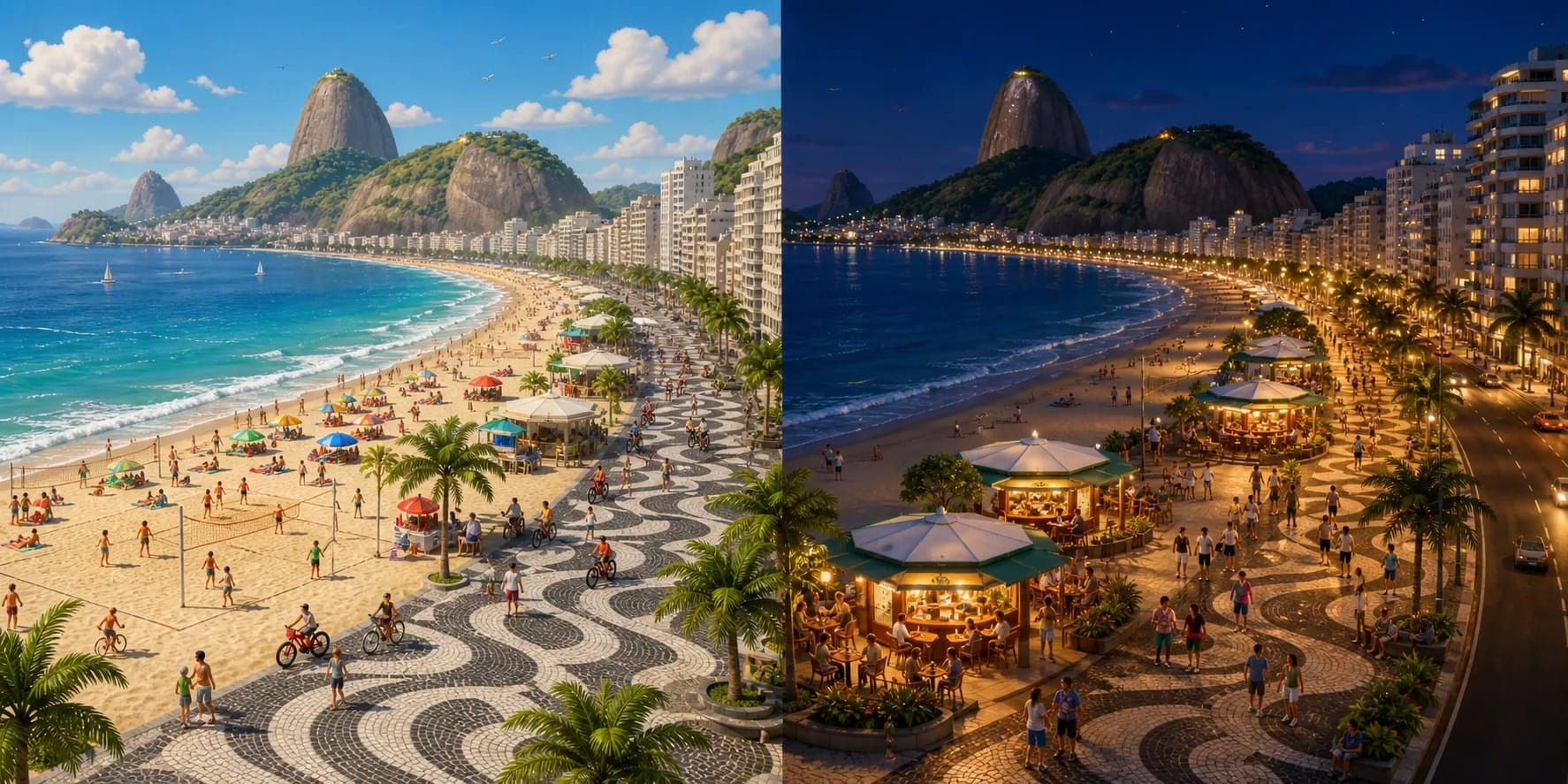
In Copacabana, walk the promenade between Leme and Posto 6, visit Forte de Copacabana at the southern tip for the full curve of the beach, climb to Forte Duque de Caxias at the Leme end, and pick your posto by character: Leme and Posto 2 quieter and family-oriented, Posto 4 busiest, Posto 6 closest to the Arpoador. Three metro stations serve the neighbourhood.
The postos: how Copacabana divides itself
The beach is organised by numbered lifeguard stations, and that numbering became the neighbourhood's informal address system. Leme, at the northern tip, is the most residential and calm stretch, with short blocks and the feel of a small neighbourhood. Postos 2 and 3 gather families and hotels; Posto 4 is the busiest and most touristed point.
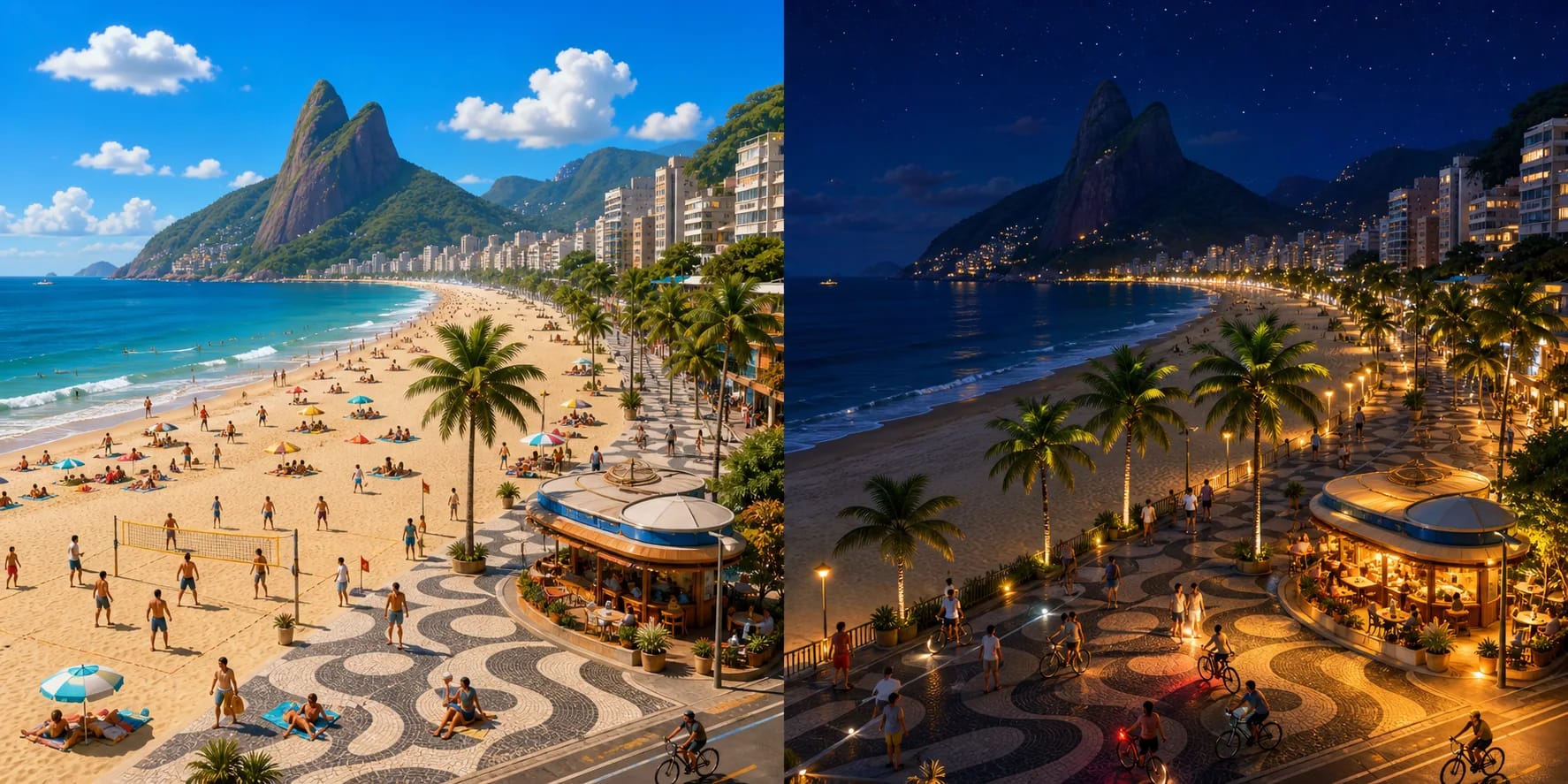
From Posto 5 to 6 the beach starts turning towards the Arpoador, with a younger crowd and constant sport. Between the sand and the promenade there is volleyball, footvolley, running and a cycle lane in motion nearly all day. Choosing the right posto is the difference between a quiet morning and a morning in the middle of everything.
- Leme and Posto 2: calmer, locals and families.
- Posto 4: the tourist heart, kiosks and movement.
- Posto 6: sport, younger crowd and access to the Arpoador.
Forte de Copacabana and Forte Duque de Caxias
Forte de Copacabana, at the Posto 6 end, is a historic military installation open to visitors, with a museum, preserved guns and one of the best framings of the beach anywhere: from there the whole curve appears, with Leme and Sugarloaf behind. It is a short visit that settles both the photograph and the neighbourhood's history at once.
At the other end, Forte Duque de Caxias occupies the Leme hill and offers a short Atlantic-forest trail up to viewpoints over the beach and the bay. Both operate with their own hours and rules, including closing days — confirm before adding them to a plan.
The promenade and street life
The wave mosaic in Portuguese stone that surfaces the promenade is a Roberto Burle Marx design, and walking it from Leme to Posto 6 takes a little over an hour at an easy pace. Early morning and late afternoon bring more residents than visitors — the best moment to understand the neighbourhood.
Behind the promenade, Avenida Nossa Senhora de Copacabana carries the everyday commerce: pharmacies, bakeries, botequins and small shops running all day. On Sundays, one carriageway of Avenida Atlântica is usually closed for leisure, and a craft market occupies part of the central reservation.
Where to eat without falling into the seafront trap
Restaurants facing Avenida Atlântica charge for the view, and quality varies widely. One or two blocks inland, the same meal usually costs considerably less: traditional botequins, bakeries with counter service and pay-by-weight restaurants serve the neighbourhood's daily life and keep working outside tourist hours.
Kiosks on the sand are handy for water, coconuts and snacks, but confirm the price before ordering and be wary of stalls with no visible price list. The same applies to beach vendors: agreeing the amount first avoids the argument afterwards.
Staying in Copacabana: advantages and caveats
Copacabana has the city's largest supply of accommodation at every price point, three metro stations — Cardeal Arcoverde, Siqueira Campos and Cantagalo — and shops open late. For a first visit to Rio, it is the base most forgiving of planning mistakes.
The caveat is its length: an address in Leme and one at Posto 6 are almost four kilometres apart, with different stations. Before booking, check on a map the real distance to the metro and to the stretch of beach you intend to use every day.
How to spend half a day in Copacabana
Choose one end of the beach instead of walking its full length and then retracing your steps. Around Posto 6, combine the promenade with a visit to the fort if its opening rules suit your day, then continue towards Arpoador. Around Leme, keep the outing centred on the waterfront and a meal nearby.
Choose your return route before extending the walk. The station closest to your hotel may not be the best one at the end of the outing. On a hot day, reduce the distance and put a café or indoor stop between exposed stretches.
Using the beach without buying a package
Decide whether you want to swim, walk or simply sit before renting equipment. Ask whether a quoted price covers one chair, an umbrella, a period of use or a minimum purchase. Confirm the total on the payment terminal and keep the receipt rather than relying on an informal running tab.
Carry only what you need and organise belongings so someone stays with them if others enter the water. The lifeguard posto is a useful meeting landmark, not storage or a guarantee of safe sea conditions. Check the beach guidance before treating a familiar-looking stretch as suitable for swimming.
Frequently asked questions
- Which is the best posto in Copacabana?
It depends what you want. Leme and Posto 2 are calmer and more family-oriented, Posto 4 is the busiest and most touristed, and Postos 5 and 6 concentrate sport and a younger crowd while sitting closest to the Arpoador.
- Is Forte de Copacabana worth visiting?
Yes, mainly for the view: from the Posto 6 headland the entire curve of the beach appears with Sugarloaf behind. It is a short visit with a military museum and cafés, and it works well in the late afternoon.
- How many metro stations does Copacabana have?
Three: Cardeal Arcoverde, Siqueira Campos and Cantagalo, all on Line 1. Because the neighbourhood is long, the nearest station changes considerably depending on your address.
- Can I walk from Copacabana to Ipanema?
Yes, the Posto 6 end connects towards Arpoador and Ipanema. The total walk depends on where you start in Copacabana. Use a mapped pedestrian route and consider heat, daylight and your return journey rather than assuming the whole trip is a short beach stroll.
Sources to check before you go
Opening hours, events and visiting conditions change. These are the official references used when reviewing this guide.