A free editorial guide from riodejaneiro.app. Use it to build your itinerary; Rio Pulse’s personalised plans are still in development.
Choose the neighbourhood by the day you want
Rio de Janeiro neighbourhoods: where to stay and what suits you
Rio's neighbourhoods are not smaller versions of the same city. The Atlantic shoreline, Guanabara Bay, the historic hills and the western zone produce genuinely different daily routines. Choosing well — where to sleep, and where to spend each part of the day — cuts travel time and changes the trip.

Quick answer
Copacabana is practical and busy; Ipanema pairs beach with street life; Botafogo has food and transport; Urca is quiet; Santa Teresa is historic and steep; Lapa concentrates nightlife; Barra da Tijuca offers a long beach and more space. For a first trip, prioritise access to the things you will genuinely do.
Seven neighbourhoods in one sentence each
Copacabana is the functional choice for anyone who wants services, transport and beach permanently within reach. Ipanema is more walkable across much of its grid and puts you between beach, shops, the Lagoa and the Arpoador. Botafogo trades sand underfoot for connections, cinemas, bars and restaurants.
Urca is residential and quiet compared with its neighbours. Santa Teresa demands an appetite for hills and repays it with studios, old houses and views through the trees. Lapa comes alive after office hours. Barra da Tijuca spreads across a much larger area and combines a long shoreline, lagoons and journeys that depend more on planning.
Copacabana or Ipanema?
Choose Copacabana if hotel variety, everyday shops and metro access matter most. The neighbourhood stays active early and late, and the promenade is part of the experience. Its length also means your exact address matters: check the real distance to the station and to the stretch of beach you intend to use.
Choose Ipanema if you want beach, restaurants and walking concentrated in a smaller radius — accepting generally higher prices. The Arpoador sits at the Copacabana end, Leblon at the other. For sunset, arrive early and watch the sea conditions on the rocks.
Botafogo and Urca: the city facing the bay
Botafogo works as a base for anyone who plans to move around. The metro links it to the centre and the south zone, and the food scene means you can finish the day without another journey. Botafogo beach is bay scenery, with boats and Sugarloaf behind — not a swimming beach in the ocean sense.
Urca combines the sea wall, low houses, access to Sugarloaf and the feel of a small village. It is excellent for a slow late afternoon, but it has fewer transport and accommodation options. Urca and Botafogo make a natural pair for a single day.
Santa Teresa and Lapa: hill, history and music
Santa Teresa is a choice of atmosphere. Cobbled streets, the yellow tram and historic houses create a landscape unlike the coast. The gradients and patchy transport mean the exact address of your accommodation matters a lot. The best plan picks a few points and avoids climbing and descending repeatedly.
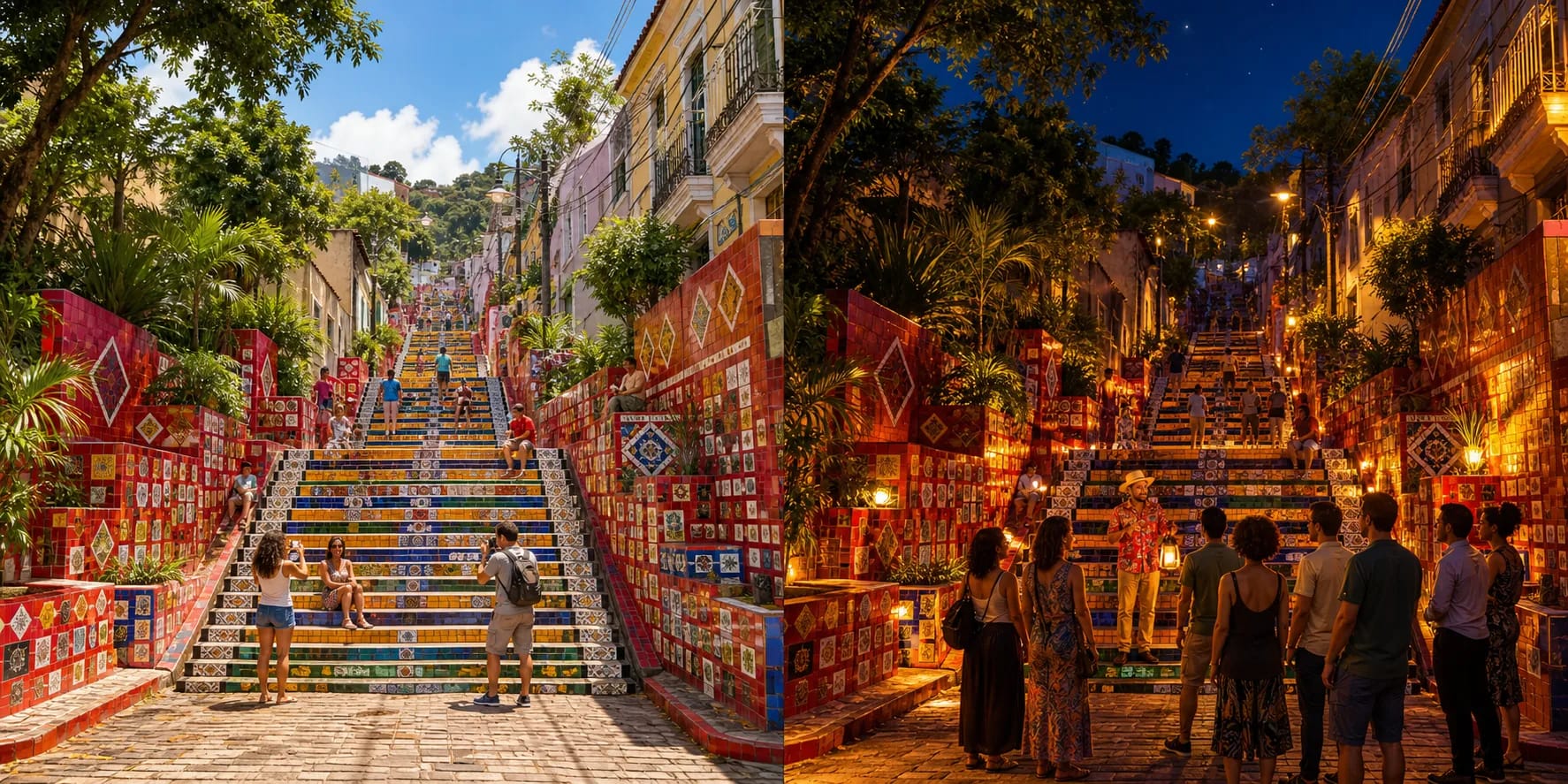
Lapa suits a visit with a defined purpose: the Arches, the Escadaria Selarón, music venues, bars or a samba circle whose programme you have confirmed. During the day, combine it with the centre and Glória. At night, plan your arrival and departure and stay on the busy streets.
Barra da Tijuca: open beach, different urban scale
Barra is not a larger Copacabana. The beach is long, the sky feels wider, and activities involving wind, waves and open sand come into their own. At the same time, addresses are spread over much greater distances. Jardim Oceânico is the area's main metro connection, but many destinations still need another leg.
Staying in Barra makes sense when beach, events or commitments in the western zone dominate the trip. If you plan to visit the centre and south zone every day, the cheaper room rate quietly converts into travel time. Compare the whole itinerary, not the nightly rate.
How to choose where to stay
Mark the three things you consider non-negotiable on a map and see where they cluster. Then assess the walk to the metro, the trip home at night, the gradient of the street and whether there are basic shops nearby. Photos of the view never reveal a hill or the real distance to a station.
There is no single best neighbourhood. There is the neighbourhood that removes friction from your itinerary. Families, solo travellers, remote workers and people here for an event all use the city differently. That practical decision usually improves a trip more than swapping one landmark for another.
Where to stay for a first visit without a car
Start with accommodation near a useful metro station in Copacabana, Ipanema or Botafogo, then compare the actual walk to your room. This is a transport shortlist, not a safety ranking. Copacabana suits a beach-based itinerary; Ipanema concentrates beach and shopping; Botafogo can suit a trip with more museums, restaurants and journeys to Centro.
For a concert, conference or sporting event, map the venue first. A south-zone hotel is not automatically convenient for repeated trips to the western zone. The transport guide helps compare transfers rather than choosing by a neighbourhood’s reputation.
Questions to ask before booking an address
Ask about street noise, stairs before the lift, reception hours and luggage storage. For an apartment, confirm who handles late check-in and whether the entrance is the one shown on the booking map. A sea view does not tell you how easily you can get home after dinner.
For a longer stay, prioritise groceries, laundry and a suitable workspace over proximity to a single attraction. Calculate accommodation and transport together. Two similar nightly rates can produce very different daily costs once repeated journeys are included.
Frequently asked questions
- What is the best neighbourhood to stay in Rio de Janeiro?
Copacabana for price, transport and services; Ipanema and Leblon for a compact, calmer radius at a higher cost; Botafogo for anyone moving around the city a lot. The right choice depends on where the things you will actually do are located.
- Is Copacabana safe for tourists?
It is a busy, policed neighbourhood with a constant flow of residents and visitors, which helps. Normal urban precautions still apply: do not display valuables on the sand or the promenade, take extra care at night, and use licensed transport.
- Is it worth staying in Barra da Tijuca?
It is if your itinerary centres on the western zone, an event, or a wide beach. If you plan to visit the centre and south zone daily, the time lost travelling usually cancels out the cheaper room rate.
- Is it better to stay near the beach or near the metro?
Match the address to your plans. A beach-first trip benefits from a short walk to the sand; a varied city itinerary benefits from a useful station. Check the exact route, since being in a coastal neighbourhood does not guarantee either.
Sources to check before you go
Opening hours, events and visiting conditions change. These are the official references used when reviewing this guide.