A free editorial guide from riodejaneiro.app. Use it to build your itinerary; Rio Pulse’s personalised plans are still in development.
The best part of the city charges nothing
Free things to do in Rio de Janeiro: five days without paying for attractions
Rio charges a lot for a couple of attractions and gives away the things that define it: beach, viewpoint, rainforest, music in the street and a historic centre that works as an open-air museum. This guide covers what you can do without a ticket — and where spending actually earns its keep.
Quick answer
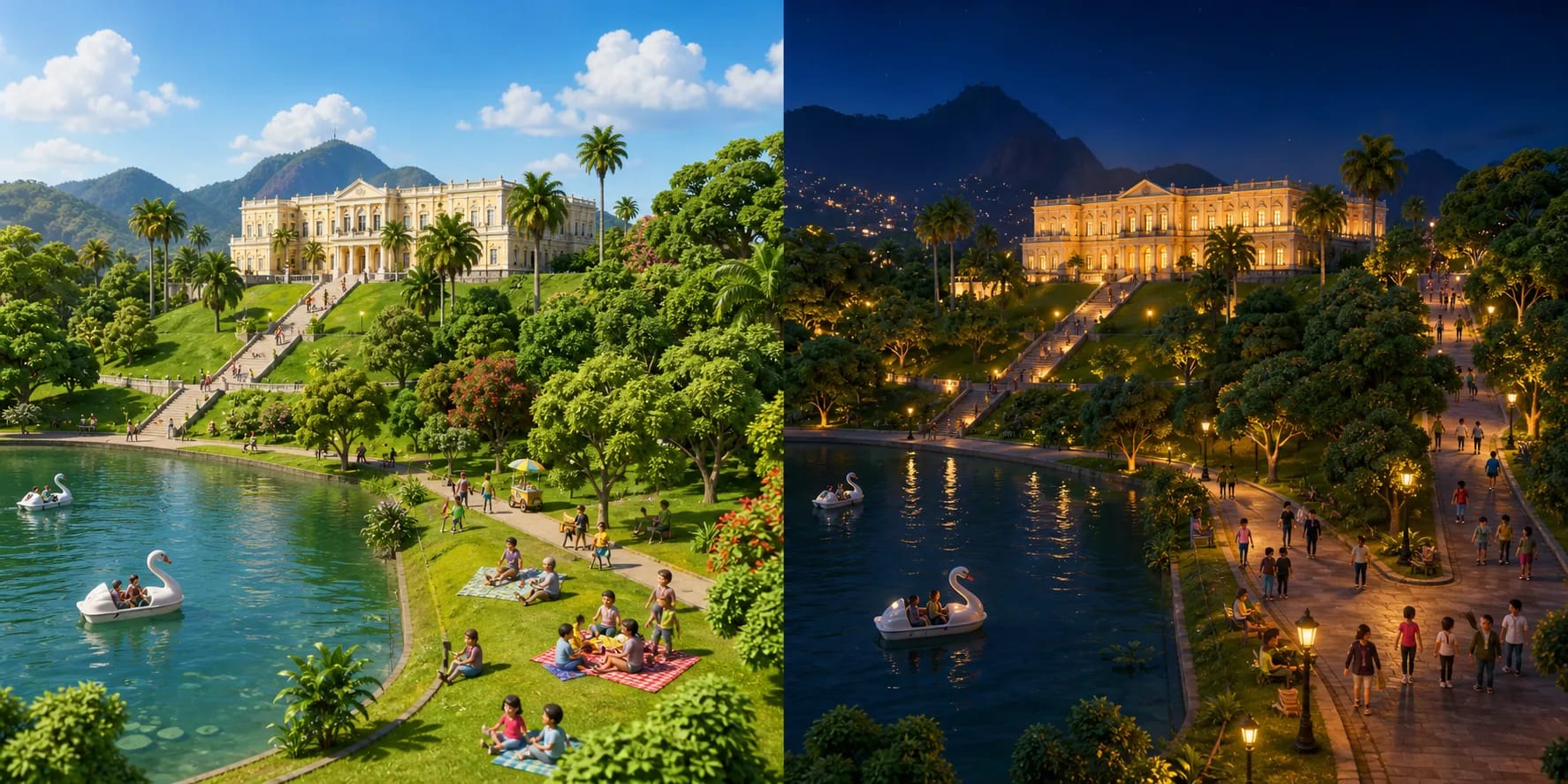
Free in Rio: every beach, sunset at the Arpoador, the trails of Tijuca National Park and the Morro da Urca via the Cláudio Coutinho path, Parque Lage, the Flamengo waterfront park, the Olympic Boulevard and the historic centre on foot. Several museums have one free day a week — always confirm on the official site, because the policy changes.
Beaches, seafront and viewpoints with no ticket
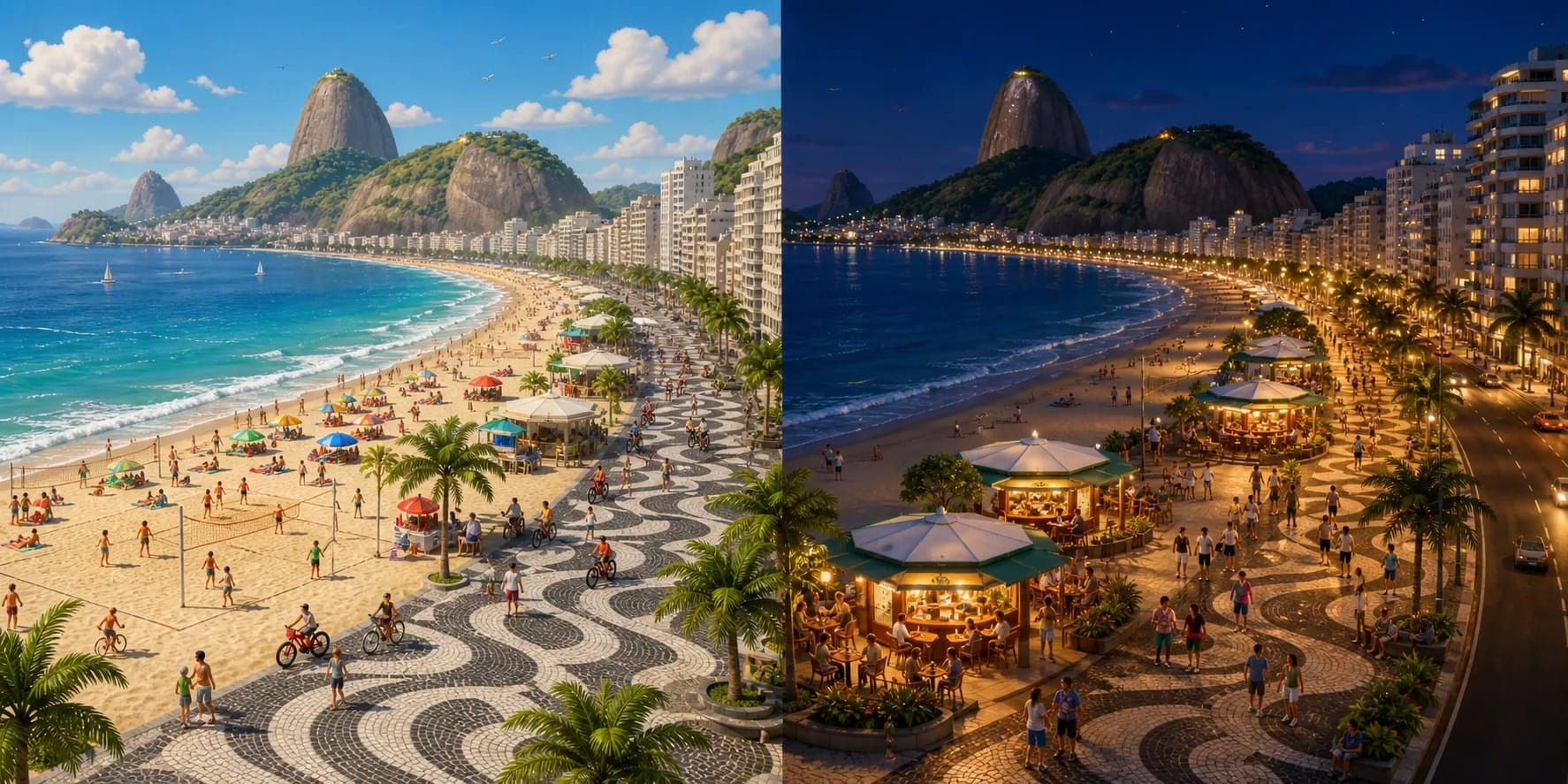
Every beach in Rio is public and free to enter, from Leme to Grumari. The promenade with its Portuguese-stone wave mosaic runs the length of Copacabana, Ipanema and Leblon; on the bay side, the Flamengo landfill park is a huge Burle Marx landscape with pitches, cycle paths and a view of Sugarloaf. There is no paid stretch of sand anywhere in the city.
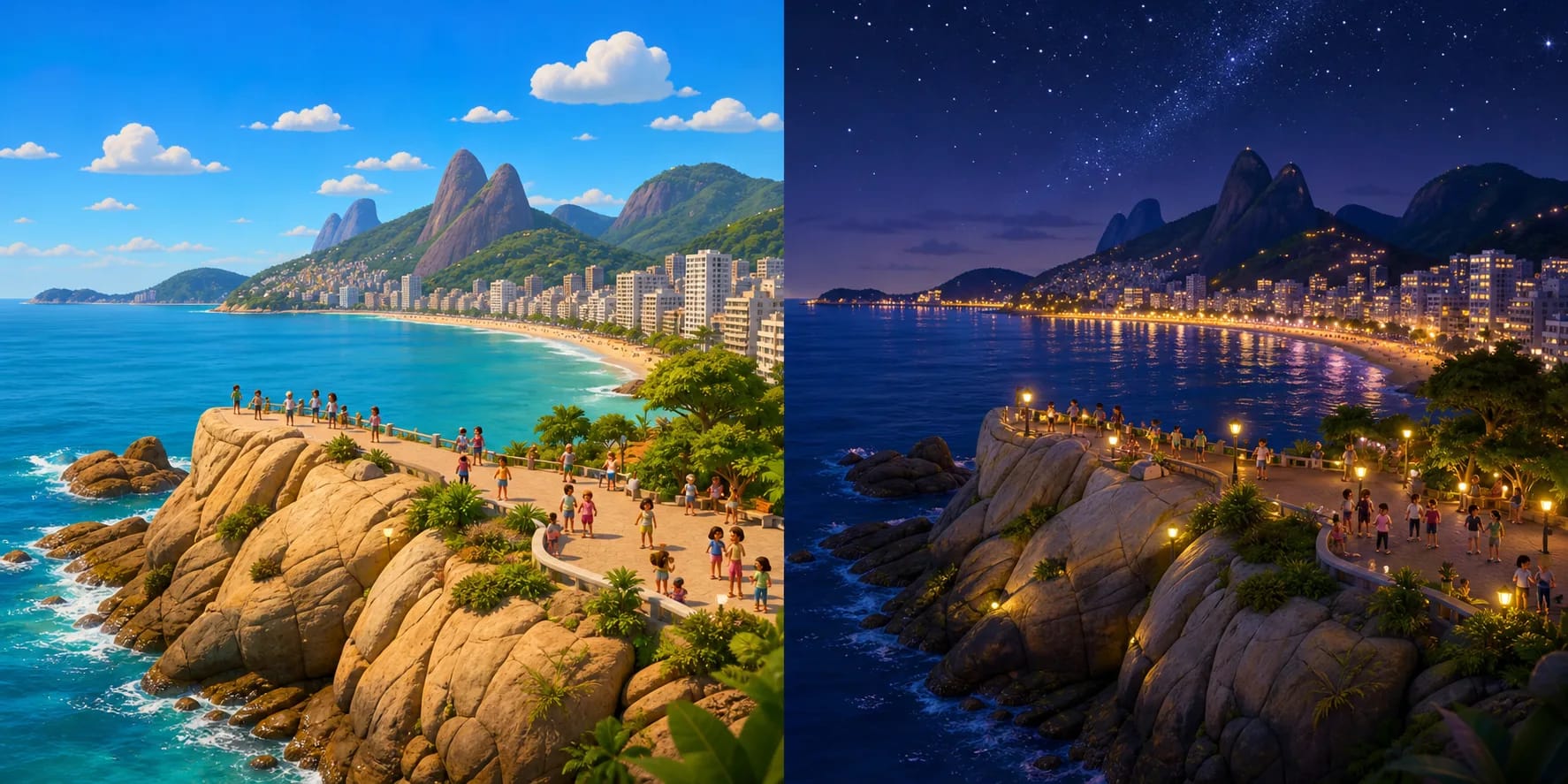
Among the free viewpoints, the Arpoador is the most famous: the rock between Copacabana and Ipanema fills up at sunset. The Mirante do Leblon, Parque Guinle and Urca's sea wall also open up views at no cost. Vista Chinesa and Mesa do Imperador, inside Tijuca National Park, are free too — you only pay to get there.
- Arpoador at the end of the afternoon.
- Flamengo park on Sundays, with lanes closed to cars.
- Urca's sea wall at the start of the evening.
Forest and free trails
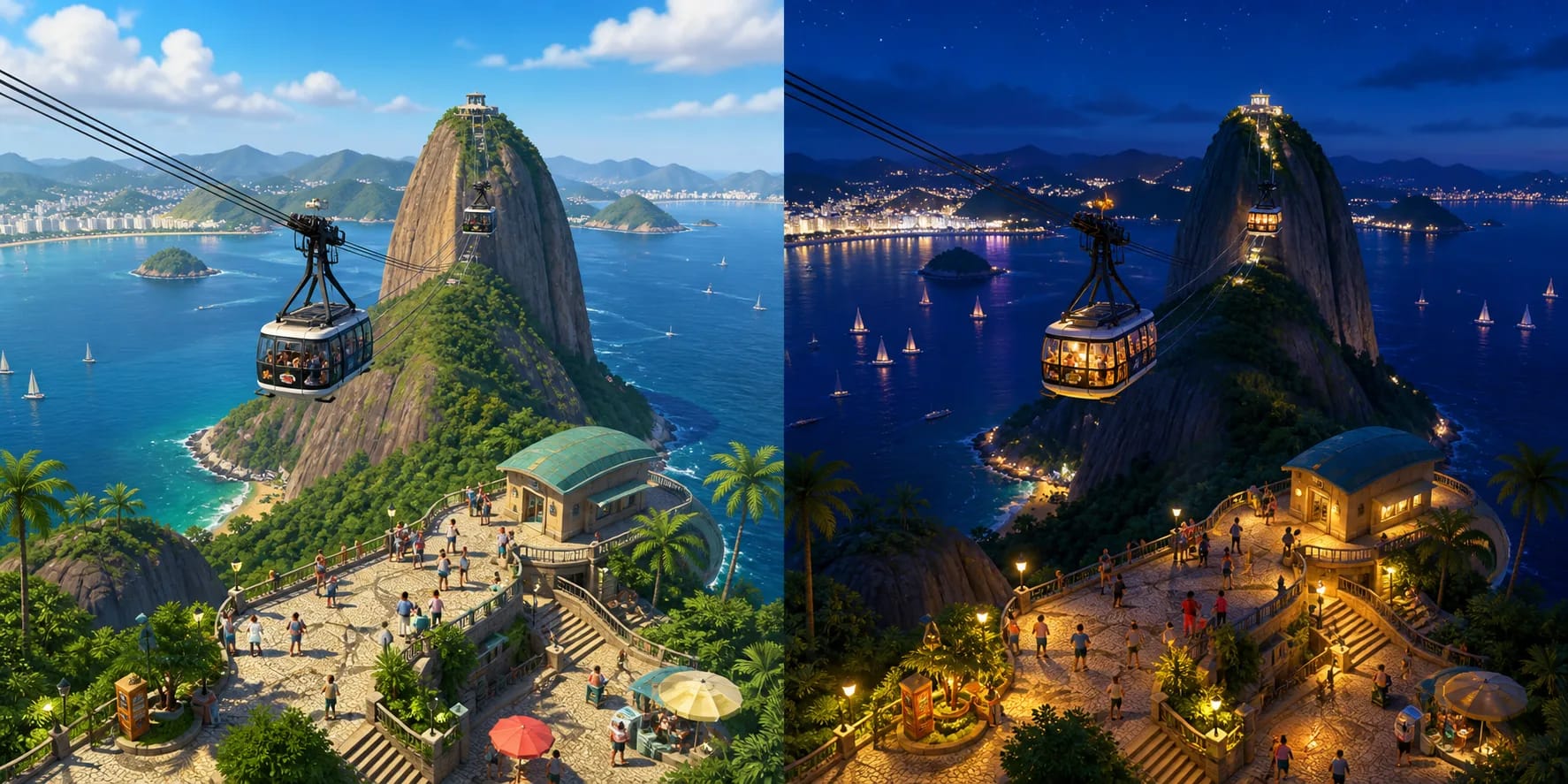
Compare a specific open route in Tijuca National Park with the Cláudio Coutinho coastal path in Urca. Separate free walking access from paid services: continuing or descending by cable car after the Morro da Urca hike requires the appropriate ticket.
Before travelling to a park or trail, check the current gate, operating notices and whether your chosen activity requires a reservation or another service. Include getting there and returning in the budget. Follow current safety advice, including route-specific travel warnings, rather than choosing a hike solely because admission is free.
Historic centre and culture on foot
Walking the centre is the cheapest cultural outing in the city. Colonial churches, the Real Gabinete Português de Leitura, Travessa do Comércio, Largo da Carioca and the Confeitaria Colombo sit within a few blocks. The Real Gabinete is free to enter and is one of the most photographed libraries in the world.
In the port district, the Olympic Boulevard holds Eduardo Kobra's Etnias mural and the route of the African Heritage Archaeological Circuit, which includes the Cais do Valongo. None of it charges admission. The Escadaria Selarón in Lapa is open at any hour, though it works best in daylight.
Museums with free admission
Several Rio museums keep one free day a week, or permanent free entry for particular groups. That commonly applies to institutions such as the Museu de Arte do Rio, the Museu Histórico Nacional and the Centro Cultural Banco do Brasil, which frequently runs free or low-cost programming.
Because these rules change often, treat any fixed list with suspicion — including this one. Before building the day, open each museum's official site and confirm the free day, whether booking is required and the opening hours. A missed booking slot is what most often wrecks a deliberately cheap itinerary.
What is free and seasonal
The city runs a large public calendar: samba circles in squares, concerts in parks, neighbourhood markets, street carnival blocos and New Year on the seafront. The Feira de São Cristóvão charges entry on some days, while the Feira do Rio Antigo in Lapa and local street markets are free. The programme varies by month and depends on permits.
Rather than leaving it to luck, check the official Riotur and city-hall calendars before each week of your trip. Street programming shifts with weather and the civic calendar, and a samba circle advertised on a two-year-old blog may simply no longer exist.
A free day without crossing the whole city
Build a no-admission day around one area. On the ocean side, choose a section of the Copacabana promenade or Ipanema and Arpoador, with a meal brought from a shop rather than a compulsory restaurant stop. In Centro, choose a compact walking route and one cultural venue whose free-entry conditions you have checked.
These are alternative days, not a route to do all at once. An attraction across the city can cost more in transport than a modestly priced one nearby. Compare your accommodation with the metro map and keep the return journey in the budget.
Frequently asked questions
- Can you visit Rio de Janeiro on a small budget?
Yes. Beaches, the seafront, viewpoints, Tijuca National Park trails, Parque Lage, the historic centre and the Olympic Boulevard are all free. The concentrated costs are accommodation, food and the two most-visited paid attractions: Corcovado and Sugarloaf.
- Can you climb Sugarloaf Mountain for free?
The trail reaches Morro da Urca. Continuing or descending by cable car is paid; check the operator’s current hiker products and access hours. Budget transport and the return separately from free walking access.
- Which museums in Rio de Janeiro are free?
Several offer one free day a week or free entry for specific groups, and the Real Gabinete Português de Leitura is always free. Because these policies change frequently, confirm on each institution's official site before you go.
- Do I need to book free attractions in Rio?
Sometimes. Free cultural programming can use timed tickets or limited capacity. Check the particular exhibition or event on the venue’s official page, including eligibility and identification requirements for any concession.
Sources to check before you go
Opening hours, events and visiting conditions change. These are the official references used when reviewing this guide.